
Article based on literature review through sciencedirect, scopus, promed and google scholar. Summary of Human Psychopharmacology 2017.
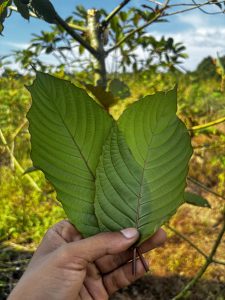
Kratom (mitragyna Speciosa) comes from the Rubiaceae or coffee family is a tropical medicinal plant in SE Asia.
The plant is found in the Borneo jungle and now is cultivated by smallholder farmers. It has been used for perceived medical values and antifatigue properties.
Men consume kratom in the morning to improve work productivity and to combat fatigue. Whilst women, use it as a household remedy for ailments such as: fever, cough, hypertension, diabetes, pain and anxiety.
In villages, kratom is served as a drink to male guests during social gatherings. It serves as a substitute for alcohol among Muslims in Malaysia and South Thailand. Kratom has also earned a place in some village religious ceremonies where it is offered to a god or spirit as a precious gifts for fulfilling their desires or vows. Kratom users are viewed as hardworking people, as compared to users of cannabis, alcohol and tobacco.
People in the community generally believe that using kratom or being dependent on it carries little risks, as compared to heroin, yaba, cannabis, or alcohol. This belief is reinforced by the fact that it appears not to cause significant physical impairments or adversely affect social functioning. Cases of toxicity associated with ketum use have also been few in the Southeast Asian context.
The recent criminalisation of kratom use has undermined what has been held as a relatively harmless practice in these societies without proper investigation. The fact that the findings about the medicinal value of ketum and its relative harmlessness, despite prolonged use, emerge from studies based on surveys and self-reports cannot in itself be a basis for legal sanctions against its use. Instead, these claims should be investigated with scientific rigour, lest we risk losing the proverbial baby with the bath water.
Complete reading: https://onlinelibrary.wiley.com/doi/full/10.1002/hup.2582