
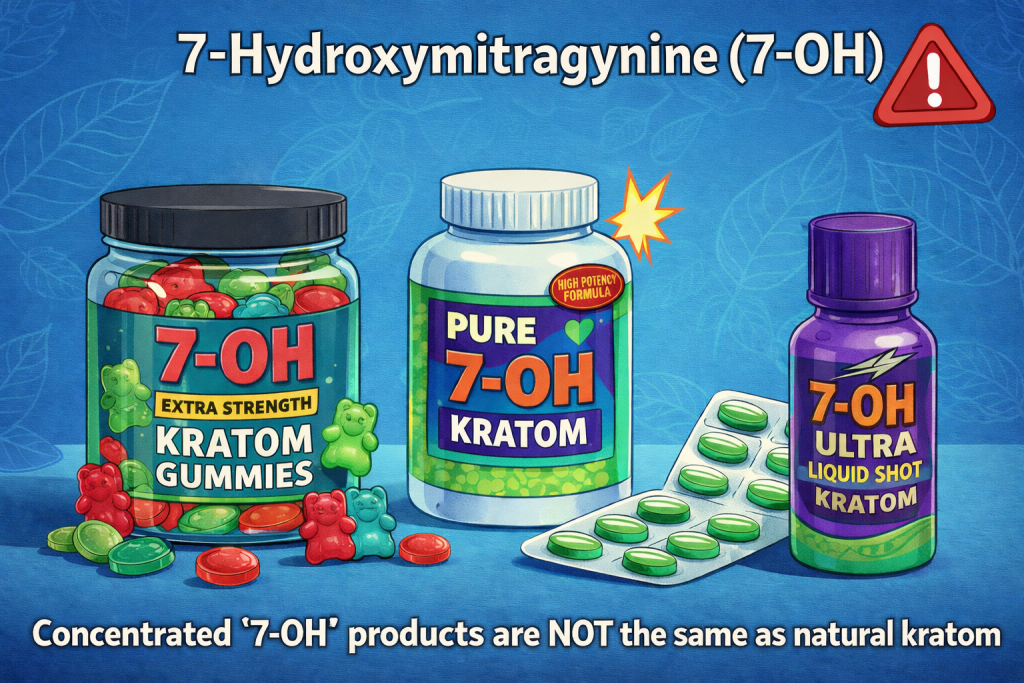
Recently, there is a lab-made substance of 7-OH that is distributed in the United States. These compounds are semi-synthetic version and often labeled as “Kratom”. This is a very different product that what kratom powder/leaf offered to the human body. Here is the summary of the scientific paper about the 7-OH substance. Picture are animated to hidden the seller store.
Kratom entered the U.S. market in the late 20th century and has since evolved into a wide range of products, including powders, capsules, gummies, energy drinks, and liquid extracts. Unlike traditional usage, these modern forms allow for higher and more frequent dosing, often promoted for self-treatment of pain, anxiety, and even opioid withdrawal.
More recently, a new wave of products containing concentrated 7-OH has emerged—available in forms such as tablets, syrups, and nasal sprays. These products can bypass the body’s natural metabolic processes, leading to rapid and significantly higher exposure levels.
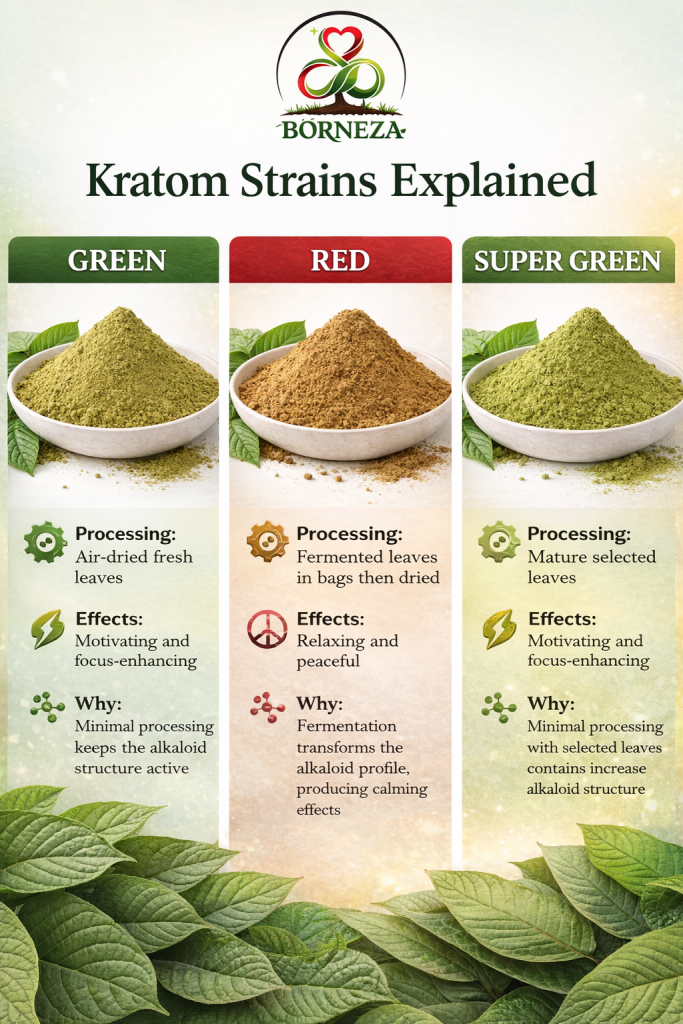
Critical distinction
Unlike traditional kratom, concentrated 7-OH products exhibit classic opioid-like effects and risks, including:
- Respiratory depression
- Tolerance and dependence
- Withdrawal symptoms
- Reinforcing (addictive) behavior
Animal and clinical studies consistently show that these effects mirror those of conventional opioids. Cases of severe intoxication, hospitalization, and even death have been reported, particularly when high doses or multiple substances are involved
A key concern is misleading marketing, where high-potency 7-OH products are labeled as “natural kratom,” potentially giving consumers a false sense of safety. Traditional kratom leaf—used in its natural form—contains minimal 7-OH and presents a very different risk profile compared to modern, concentrated formulations.
The evidence clearly shows that concentrated 7-OH products are not simply stronger kratom—they are fundamentally different substances, behaving more like synthetic opioids than herbal remedies
Conclusion
As the market continues to evolve, the line between natural supplements and synthetic drug-like products is becoming increasingly blurred. While kratom has a long history of traditional use, the emergence of concentrated 7-OH products introduces serious public health risks that cannot be ignored. Consumers, regulators, and healthcare professionals must recognize this distinction to ensure informed decisions and appropriate safety measures moving forward.
Complete reading: https://pmc.ncbi.nlm.nih.gov/articles/PMC12671409